
1. Executive Summary
The global packaging design industry is entering a period of rapid transformation driven by environmental imperatives, technological innovation, and evolving consumer expectations. As of 2025, the global market scale has reached approximately $1200 billion, with a projected compound annual growth rate (CAGR) of 6.5% leading to $1800 billion by 2030. Regional markets exhibit distinct dynamics, with the Asia-Pacific region accounting for 45% of the global market share (approximately $540 billion), followed by North America at 30% ($360 billion) and Europe at 15% ($180 billion) . China, as a key growth engine, is expected to hold 28% of the global market share in 2025, rising to 35% by 2030.
This report identifies four core trends shaping the industry: circular economy-driven sustainable innovation, technology-empowered smart packaging, minimalist-focused visual communication, and experience-integrated design evolution. These trends collectively redefine packaging from a protective function to a multidimensional carrier of brand value, environmental responsibility, and consumer engagement.
2.Core Trend 1: Circular Economy-Oriented Sustainable Packaging
2.1 Material Innovation: From Single-Use to Circular Cycles
The most prominent advancement lies in the development and application of biodegradable and upcycled materials. Edible packaging has emerged as a breakthrough innovation—exemplified by the diamond award-winning collaboration between This Way Up and One Good Thing, whose all-natural edible coating replaces plastic and leaves no environmental residue. Agricultural byproducts are also gaining traction: Thailand’s “The Good of Nature” packaging utilizes orange orchard fallen leaves, which after initial use decompose into natural fertilizer within 365 days.
Nanotechnology is enhancing sustainability without compromising performance. Bio-nano composites are replacing petroleum-based plastics, offering both full biodegradability and improved tensile strength and barrier properties through nanoparticle-polymer chain interactions. These material innovations address the longstanding trade-off between environmental performance and functional reliability.
2.2 Design for Circularity: Extending Lifecycles
Beyond material selection, design now prioritizes the entire product lifecycle. The “Leave No Trace” principle, highlighted in Pentawards 2024-2025 trends, emphasizes designs that either disappear completely or re-enter ecological cycles. Structural innovations like modular packaging systems reduce waste by enabling component reuse, while cube-shaped packaging (dubbed “The Cube Effect”) optimizes transportation efficiency through space-saving geometry, directly reducing carbon footprints.
Regulatory pressures further accelerate this shift. Governments worldwide are implementing stricter packaging waste management policies, forcing brands to integrate recyclability, compostability, and source reduction into core design criteria rather than as afterthoughts.
3.Core Trend 2: Technology-Enabled Smart Packaging Systems
Smart packaging, integrating digital technology with traditional packaging functions, is experiencing exponential growth, with a projected market scale of $200 billion by 2030. This trend transforms passive packaging into active data carriers and interaction touchpoints across the supply chain.
3.1 Connectivity: Bridging Physical and Digital Worlds
QR codes and Near-Field Communication (NFC) tags have become standard features, providing end-to-end supply chain transparency. Consumers and stakeholders can scan these codes to access product origin, manufacturing processes, and authentication information, addressing counterfeiting concerns while building trust. For example, premium wine brands now use NFC-embedded labels to verify authenticity and share vineyard stories, enhancing brand value through transparency.
3.2 Sensing Technology: Ensuring Product Integrity
Sensor integration has become critical for perishable goods and pharmaceuticals. Biosensors, gas sensors, and freshness indicators monitor product conditions in real-time—Thailand’s orange packaging uses leaf color changes to signal freshness: green (under 5 days), yellow (10 days, optimal), and brown (30 days, declining quality) . Environmental sensors track temperature, humidity, and location throughout transportation, with data transmitted to cloud networks for proactive quality management.
3.3 Digitalization of Design and Production
Advanced technologies are revolutionizing the design workflow. 3D printing enables cost-effective, rapid prototyping and personalized packaging without traditional tooling expenses , while Virtual Reality (VR) and Augmented Reality (AR) create immersive design experiences and consumer interactions. Artificial Intelligence (AI) further optimizes processes by analyzing market data to predict consumer preferences and automating production for greater agility.
4.Core Trend 3: Minimalist “Solo Symbolics” in Visual Communication
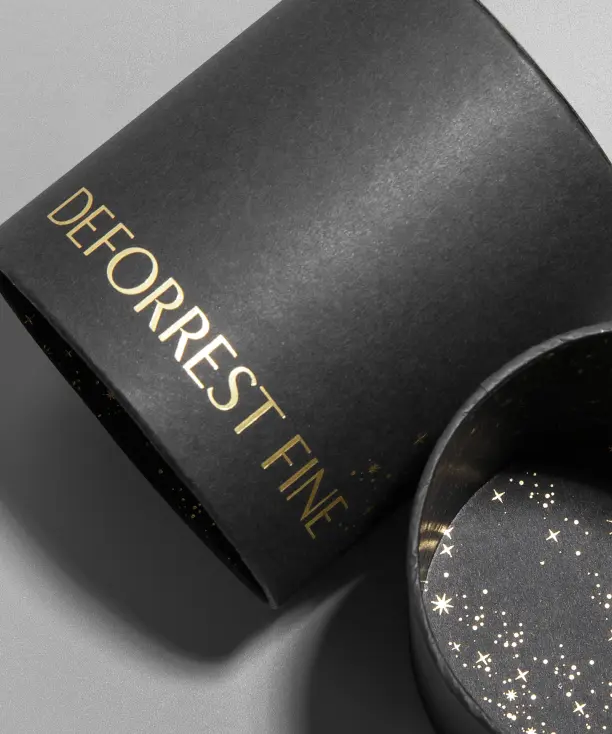
In an era of information overload, packaging visual design is shifting toward simplicity and memorability. The “Solo Symbolics” trend identified by Pentawards eliminates cluttered elements, focusing on a single, impactful brand symbol to enhance recognition and emotional connection.
This approach prioritizes quality over quantity, combining minimalist visuals with premium material textures. Stoney Vineyard’s wine packaging features a single split rock image—reflecting its terroir—paired with custom foil accents that create striking contrast against the matte surface. Laocoon Wine takes this further with a sculpted pewter snake (inspired by Roman mythology) wrapping the bottle, using a single decorative element and monochromatic printing on recycled paper for both luxury and sustainability.
The effectiveness of this trend lies in its dual functionality: it stands out on crowded shelves while remaining versatile enough for repurposing—consumers retain these packages for home use, extending brand exposure . This minimalist aesthetic has gained particular traction in the beverage industry and is expanding to cosmetics and premium food sectors.
5.Core Trend 4: Experience-Integrated Design and Regionalization
Modern packaging design transcends functional and visual roles to become a platform for consumer experience, with regional markets developing distinct characteristics based on cultural and economic factors.
5.1 Experience-Centric Structural Design
Structural innovations now focus on user convenience and emotional engagement. China’s Guanlan Barrel-Aged Craft Beer features a bottle with wave-like rock textures (echoing the brand’s “watching the waves” meaning) and a lighthouse-shaped neck, creating tactile and symbolic experiences. For the spirits category, Destiny Spirits uses ceramic cube bottles inspired by Italian cuisine and classic cocktails, merging functionality with cultural storytelling.
5.2 Regional Market Dynamics
Asia-Pacific leads in market growth, driven by China’s manufacturing scale and India’s emerging consumer market. China’s $300 billion 2025 market (projected to reach $450 billion by 2030) benefits from government manufacturing upgrade policies and e-commerce expansion. India and Southeast Asia are also growing rapidly, with projected 2030 market scales of $120 billion and $90 billion respectively.
North America and Europe, while more mature, lead in technology adoption. The U.S. market ($200 billion in 2025) focuses on smart packaging innovations, while Canada ($70 billion in 2025) excels in sustainable technology. European designs emphasize circular economy principles and luxury minimalism, reflecting regional environmental values and consumer preferences.

6.Industry Challenges and Future Outlook
6.1 Key Challenges
Despite positive growth, the industry faces significant hurdles:
Material Costs: New sustainable materials often command 20-30% higher prices than traditional alternatives, pressuring profit margins.
Technological Barriers: Small and medium enterprises struggle to adopt smart packaging due to high initial investment in sensors and digital infrastructure.
Regulatory Complexity: Varying environmental standards across regions create compliance challenges for global brands.
Intellectual Property Risks: Design copying remains prevalent, particularly in fast-growing Asian markets.
6.2 Future Outlook and Recommendations
The 2025-2030 period will see deeper integration of sustainability and technology. To capitalize on growth opportunities, stakeholders should consider:
Regional Strategy: Adapt designs to local preferences—emphasizing technology in North America, sustainability in Europe, and cultural symbolism in Asia.
R&D Investment: Prioritize biodegradable material development and smart sensor miniaturization to reduce costs.
Ecosystem Collaboration: Partner with e-commerce platforms and retailers to develop packaging tailored for logistics efficiency.
Talent Development: Cultivate designers with cross-disciplinary skills in materials science, digital technology, and cultural aesthetics.
7.Conclusion
The global packaging design industry is undergoing a paradigm shift, moving from a product-centric to a value-driven model. Sustainability provides the ethical foundation, smart technology enables functional enhancement, minimalist visuals ensure effective communication, and experience design creates emotional connections. With a projected $1800 billion market by 2030, the industry’s future belongs to brands and designers that integrate these trends while addressing cost, technology, and regulatory challenges.
As packaging evolves from “protection” to “connection,” it will play an increasingly critical role in circular economies, digital ecosystems, and consumer lifestyles—proving that thoughtful design can drive both business success and environmental responsibility.

Custom Packaging, Crafted for Your Brand
Tailored designs, quality builds, and hassle-free service. Start your custom packaging journey now!