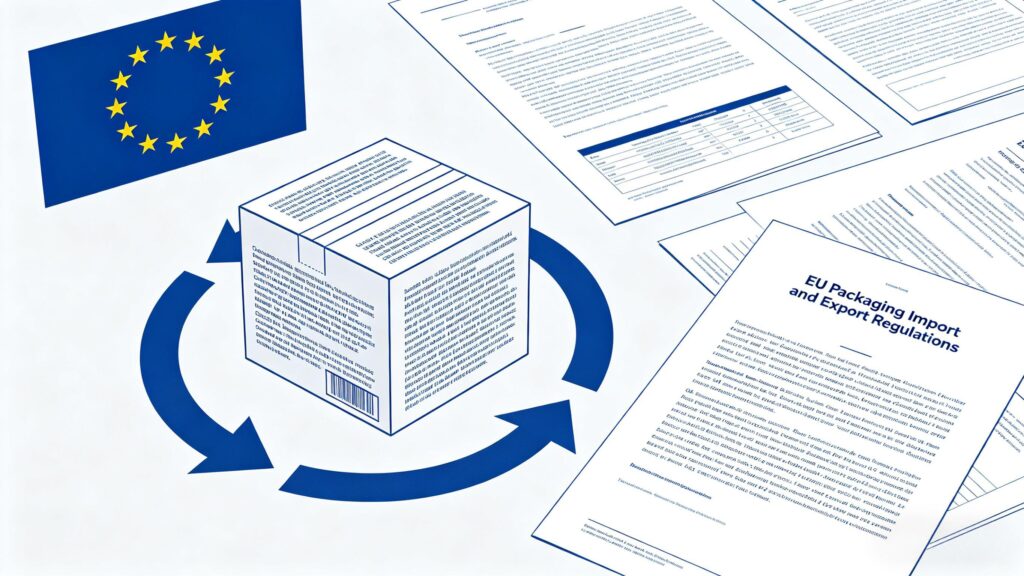
The European Union has established a comprehensive and rigorous regulatory framework for the import and export of packaging products, aiming to ensure product safety, protect human health and the environment, and promote the development of a circular economy. These regulations cover all types of packaging materials, forms and application scenarios, and are binding on all EU member states as well as enterprises importing or exporting packaging products to and from the EU. With the implementation of the new Packaging and Packaging Waste Regulation (PPWR), the EU’s regulatory requirements for packaging products have become more stringent, bringing new compliance challenges and requirements to global packaging enterprises.
1. Legislative Framework of EU Packaging Import/Export Regulations
The EU’s packaging import and export regulations are based on a multi-level legislative system, with regulations directly applicable across the EU and supporting directives and standards supplementing them, forming a full-chain management system from packaging design, production to waste disposal.
The core legislation currently in force is PPWR, which was formally adopted in late 2024, entered into force on February 11, 2025, and will be fully enforced on August 12, 2026. It completely replaces the nearly 30-year-old Directive 94/62/EC, upgrading from a directive that requires member states to transpose into national law to a directly applicable regulation, ensuring uniform implementation standards across the 27 EU member states and eliminating the differences in national implementation of the old directive.
In addition to PPWR, there are a number of supporting regulations covering specific fields: Regulation (EC) No 1935/2004 and Regulation (EU) No 10/2011 regulate packaging materials in contact with food, setting strict limits on migratory substances and authorized ingredients; the General Product Safety Regulation (GPSR), which came into force on December 13, 2024, requires packaging of consumer products to indicate the EU responsible person’s information; Regulation (EU) 1169/2011 specifies labeling requirements for food packaging, including mandatory information such as product name, net weight and nutrition declaration. These regulations together form a comprehensive regulatory network for EU packaging import and export.
2. Core Regulatory Requirements for Imported and Exported Packaging Products
The EU’s regulatory requirements for imported and exported packaging products focus on environmental sustainability, chemical safety, labeling and traceability, and extended producer responsibility, with phased implementation requirements to guide enterprises to gradually achieve compliance.
2.1 Chemical Safety and Hazardous Substance Control
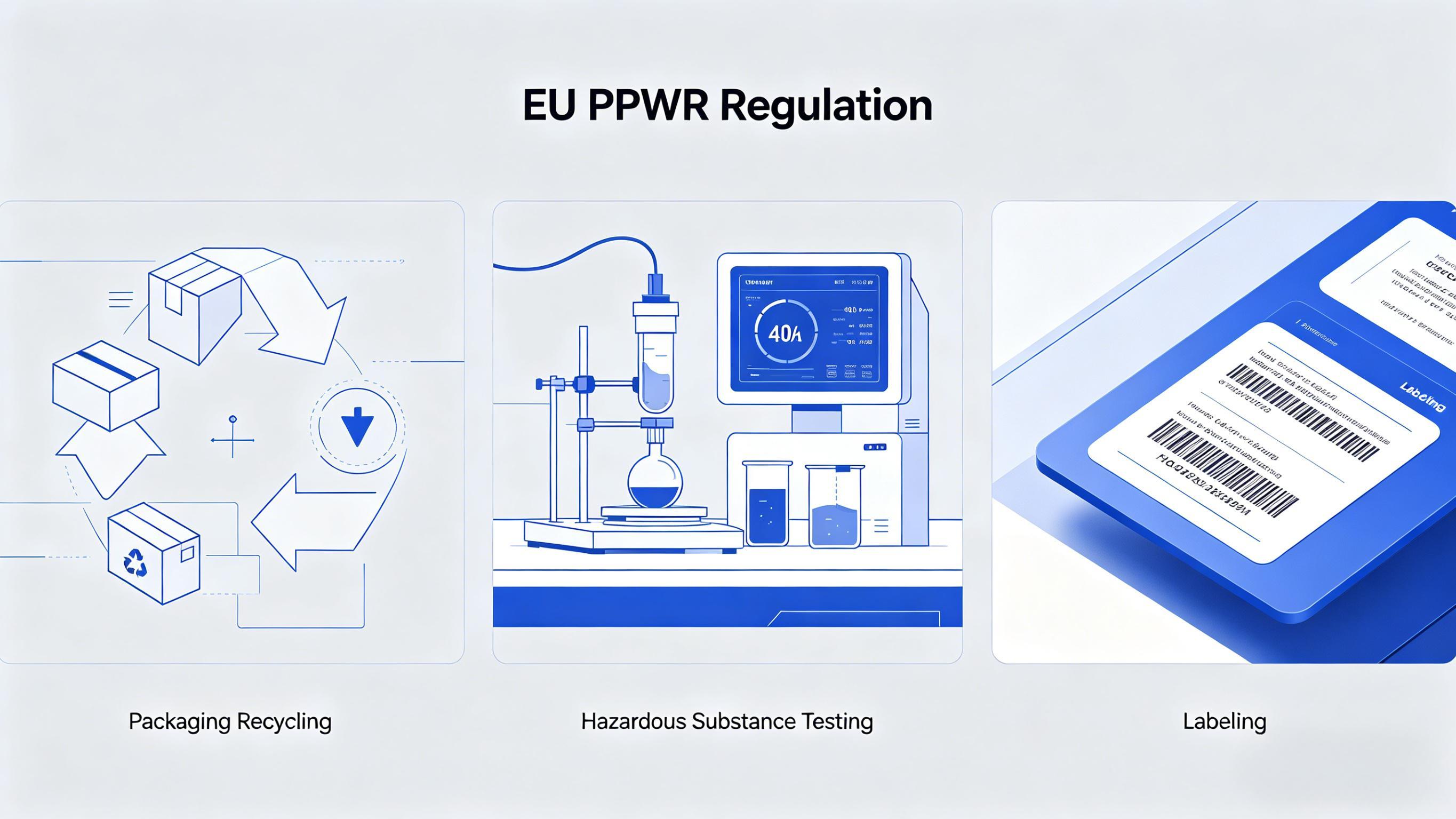
Chemical safety is the basic threshold for packaging products to enter the EU market. PPWR clearly stipulates the limit requirements for hazardous substances in packaging, which will take effect on August 12, 2026. The total content of heavy metals shall not exceed 100mg/kg; for food contact packaging, the control of per- and polyfluorinated alkyl substances (PFAS) is strictly implemented, with monomer PFAS ≤25ppb, total PFAS ≤250ppb, and total fluorine in polymer PFAS ≤50ppm. In addition, packaging products are prohibited from containing other substances of very high concern (SVHC), and enterprises need to conduct strict detection and control of raw materials to ensure that they meet the requirements.
For plastic packaging in contact with food, Regulation (EU) No 10/2011 lists authorized substances, including monomers, additives and polymer production aids, and sets specific migration limits and overall migration limits to prevent toxic substances from migrating into food and endangering human health. Manufacturers must issue a written declaration of conformity, clearly indicating the composition of materials and substances used, which must be updated when there are significant changes in composition or production processes.
2.2 Environmental Sustainability and Circular Economy Requirements
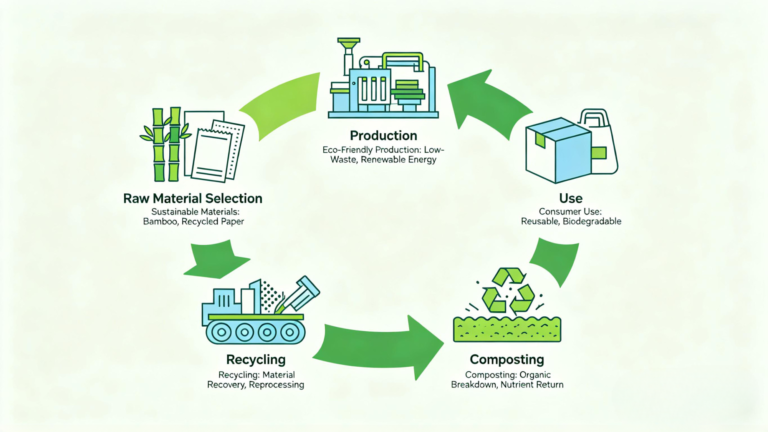
Promoting the circular economy is the core goal of PPWR, which puts forward clear requirements for the recyclability, recycled material content and packaging reduction of imported and exported packaging products.
In terms of recyclability, PPWR introduces a three-level (A/B/C) recyclability rating system, with thresholds increasing year by year. From 2030 onwards, all packaging products must reach grade C (recyclability ≥70%), otherwise they will be prohibited from entering the EU market; from 2038 onwards, only grade A (recyclability ≥95%) and grade B (recyclability ≥80%) packaging will be allowed. The regulation prohibits complex composite materials and difficult-to-separate multi-layer structures, and promotes single-material and easy-to-disassemble packaging designs to avoid excessive packaging.
For plastic packaging, PPWR sets phased mandatory requirements for recycled material content. By 2030, the minimum recycled material content of disposable plastic beverage bottles and PET food contact packaging shall be ≥30%, non-PET food contact packaging ≥10%, and other plastic packaging ≥35%; by 2040, the requirements will be further raised to 65%, 50%, 25% and 65% respectively. Enterprises need to provide certificates of origin and test reports for recycled materials, and food contact recycled materials must meet additional safety requirements.
In terms of packaging reduction and reuse, taking 2018 as the benchmark, the overall packaging reduction target is 5% by 2030, 10% by 2035 and 15% by 2040; the plastic packaging reduction target is 10% by 2030, 15% by 2035 and 20% by 2040. For reusable packaging, the reuse ratio of transport packaging shall reach 40% by 2030 and 70% by 2040, and the reuse ratio of combined packaging shall reach 10% by 2030 and 25% by 2040. In addition, the catering and retail industries are required to provide options for customers to bring their own containers free of additional charges, and restrict single-serve condiments and disposable small packaging in hotels.
2.3 Labeling, Marking and Digital Traceability
The EU has strict requirements for the labeling and marking of imported and exported packaging products, which are divided into mandatory information and special marking requirements according to different product types.
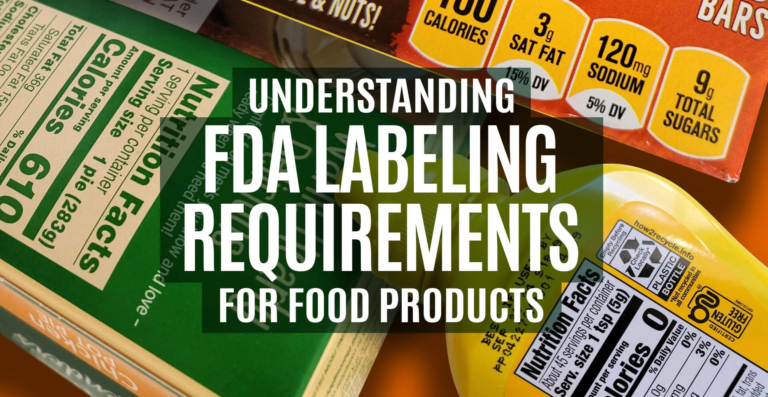
For food packaging, in addition to the basic information specified in Regulation (EU) 1169/2011, a nutrition declaration is mandatory, including energy value and the content of fat, saturated fat, carbohydrates, sugars, protein and salt. For fishery and aquaculture product packaging, it is also necessary to indicate the commercial and scientific name of the species, production method and fishing area.
According to PPWR, from August 12, 2028, all packaging products must be marked with a “unified material identifier + QR code”. Scanning the QR code can view material composition, recycling guidelines and EPR information; at the same time, a “packaging digital passport” must be established to realize full-chain traceability. In addition, the GPSR regulation requires that the packaging of products sold remotely must indicate the mailing address and electronic address of the EU responsible person, and QR codes cannot be used to replace this information.
For packaging materials that need to be recycled, theMobius loop symbol is usually required to be marked, indicating the material type and recycling method, which helps consumers and recycling institutions to classify and process them correctly.
2.4 Extended Producer Responsibility (EPR)
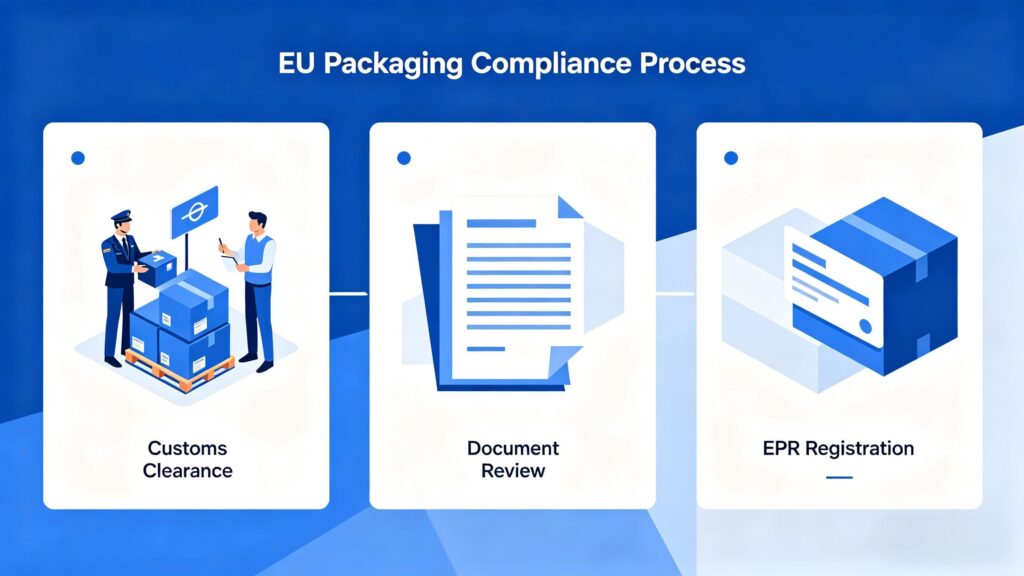
EPR is a key access requirement for packaging products to enter the EU market, which will be fully enforced from August 12, 2026. All enterprises that put packaging products on the EU market, including cross-border sellers and e-commerce platforms, must complete EPR registration in the target sales country; e-commerce platforms will forcibly verify the EPR registration number, and products without a registration number will be directly prohibited from being sold. Non-EU enterprises must appoint a local EU compliance representative to bear the compliance responsibility, including handling packaging waste recycling, paying relevant fees and cooperating with regulatory inspections.
3. Compliance Process and Key Notes for Import/Export Packaging
Enterprises importing or exporting packaging products to and from the EU need to go through a strict compliance process to ensure that their products meet all regulatory requirements and avoid being detained, returned or destroyed by EU customs.
3.1 Pre-export Preparation and Compliance Assessment
First, enterprises need to clarify the specific regulatory requirements applicable to their packaging products, including the scope of PPWR and supporting regulations, and determine the corresponding limits of hazardous substances, recycled material content, labeling requirements and EPR obligations according to the material, purpose and sales country of the packaging.
Second, conduct product testing and certification. It is necessary to entrust an EU-recognized testing institution to test the content of hazardous substances, recyclability, recycled material content and other indicators of the packaging, and issue a test report; for food contact packaging, additional migration testing is required to ensure compliance with relevant standards. At the same time, enterprises need to issue a Declaration of Conformity (DoC), a legally binding self-declaration confirming that the packaging products meet the requirements of EU regulations, which must be prepared in accordance with the templates specified in PPWR and accompanied by supporting technical documents.
In addition, non-EU enterprises need to appoint an EU local compliance representative, complete EPR registration in the target member states, and obtain the EPR registration number to ensure that the products can pass the platform verification and customs inspection.
3.2 Customs Clearance and Document Submission
When importing or exporting packaging products, enterprises need to submit complete customs clearance documents to EU customs, including commercial invoice, packing list, bill of lading, test report, Declaration of Conformity, EPR registration certificate and compliance representative authorization document.
EU customs will conduct random inspections on imported packaging products, focusing on checking whether the hazardous substance content, labeling and EPR registration meet the requirements; for non-compliant products, customs will take measures such as detention, return or destruction, and may impose fines on the importing enterprise. Therefore, enterprises must ensure the authenticity and completeness of the documents to avoid unnecessary losses.
3.3 Post-export Management and Compliance Update
After the packaging products are put on the EU market, enterprises need to establish a long-term compliance management mechanism, track the implementation progress of EU regulations, and timely adjust product design and production processes according to the phased requirements of PPWR.
At the same time, enterprises need to keep all compliance documents for at least 10 years for EU regulatory authorities to inspect. In addition, they need to cooperate with the compliance representative to complete the declaration and payment of EPR fees, and report the recycling of packaging waste in accordance with the requirements of the target member states.

4. Impact and Countermeasures for Enterprises
The implementation of EU packaging import and export regulations, especially PPWR, has brought both challenges and opportunities to global packaging enterprises. For enterprises exporting to the EU, the main impacts include the increase of market access thresholds, the surge of compliance costs and supply chain pressure, and the improvement of operational complexity. Compliance costs include the premium of recycled materials and compliant materials, as well as the increase of testing and certification fees; enterprises need to replace inventory packaging, redesign products, and face the risk of scrapping non-compliant inventory; the supply chain needs full-chain traceability, and enterprises need to obtain compliance certificates from suppliers.
To cope with these impacts, enterprises can adopt phased compliance strategies: in the short term, prioritize completing EPR registration in core EU markets, appoint a local compliance representative, test packaging products to eliminate non-compliant materials, simplify packaging design and clean up non-compliant inventory; in the medium term, gradually introduce compliant post-consumer recycled materials, promote recyclable solutions for logistics packaging, and design material labels and traceable QR codes according to EU standards; in the long term, integrate recyclability and high reuse concepts into product R&D, select compliant suppliers, establish a material traceability system, and layout cutting-edge packaging technologies to form a competitive advantage.
5. Conclusion
The EU’s packaging product import and export regulations are characterized by strictness, comprehensiveness and forward-looking, focusing on balancing product safety, environmental protection and circular economy development. With the full implementation of PPWR, the EU’s regulatory system for packaging products will become more unified and standardized, which will help promote the global transformation of the packaging industry towards green and sustainable development.
For enterprises engaged in the import and export of packaging products to and from the EU, it is crucial to accurately grasp the content and implementation timeline of relevant regulations, establish a sound compliance management system, and actively adjust product strategies to meet the EU’s regulatory requirements. Only by achieving full-process compliance can enterprises smoothly enter the EU market, avoid regulatory risks, and gain long-term development opportunities in the global competition. At the same time, the EU’s regulatory practice also provides a reference for the formulation of packaging regulations in other regions, promoting the healthy and sustainable development of the global packaging industry.

Custom Packaging, Crafted for Your Brand
Tailored designs, quality builds, and hassle-free service. Start your custom packaging journey now!